SUSTAIN-A-WAVE

Sustainability in Water Sports Event Management

This module explores the principles and practices of sustainability in water sports events management. It highlights the importance of integrating environmental, social, and economic sustainability into event planning and execution. Sustainable event management is crucial for minimizing negative impacts on aquatic ecosystems, promoting community engagement, and ensuring the long-term viability of water sports. By adopting sustainable approaches, event organizers can lead by example, foster environmental stewardship, and contribute to the broader goals of Education for Sustainable Development (ESD) in the water sports sector.

This module focuses on the sustainable management of water sports events. Learners will gain an understanding of the key concepts of sustainability, the unique challenges of organizing water sports events, and the importance of responsible event management. Key learning objectives:

  • Understand the principles of sustainability in the context of water sports events.
  • Identify legal, regulatory, and stakeholder considerations.
  • Recognize the importance of risk assessment, safety, and environmental protection.
  • Develop skills for planning, implementing, and evaluating sustainable water sports events.
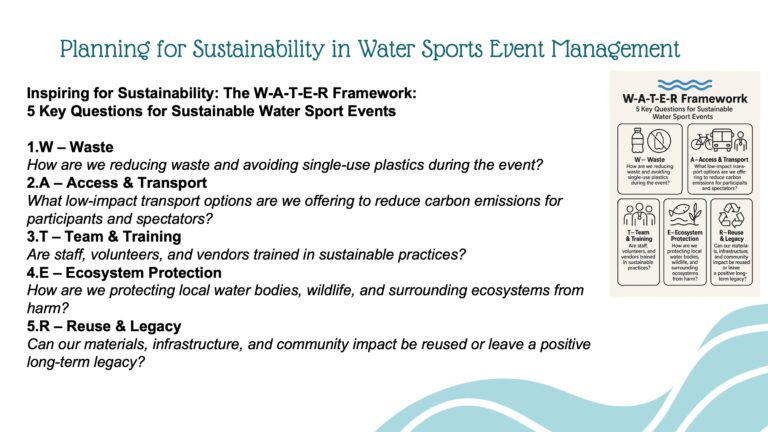
This chapter introduces the sustainability relevance to water sports event management. It covers the three pillars of sustainability—environmental, social, and economic—and discusses how these principles can be applied to the planning and execution of water sports events. The chapter also mentions the expectations from stakeholders, including participants, sponsors, and local communities, for events to be organized in a responsible and sustainable manner.

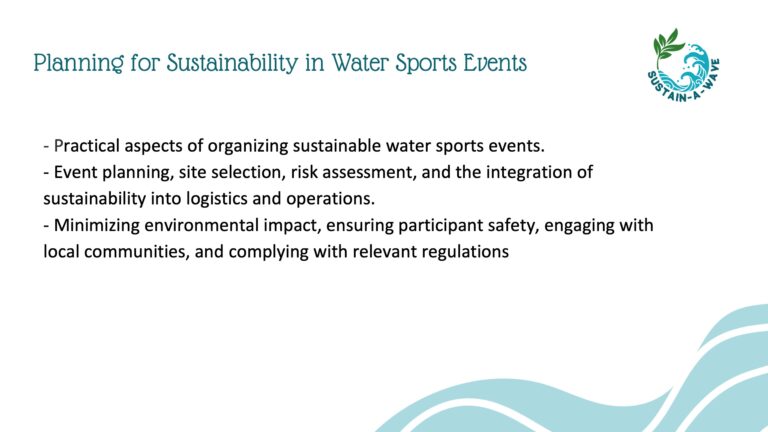
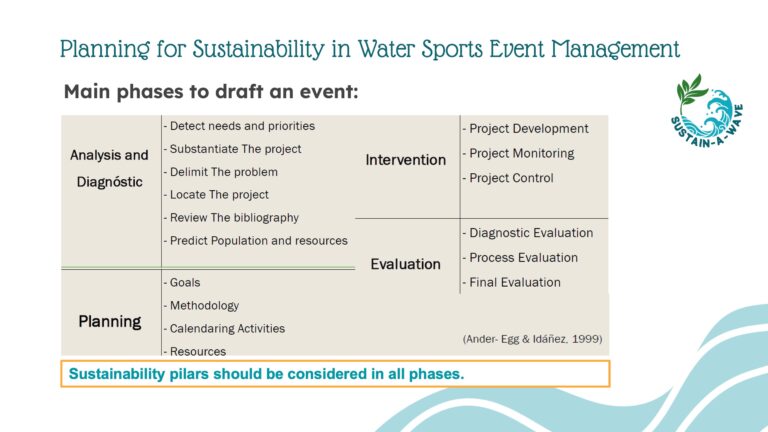
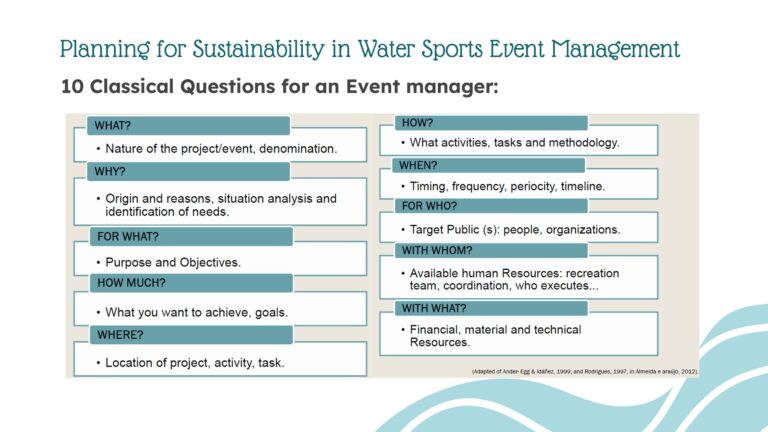
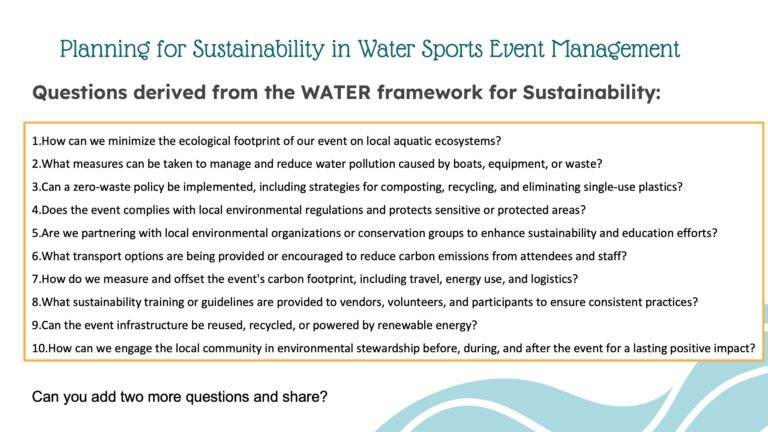
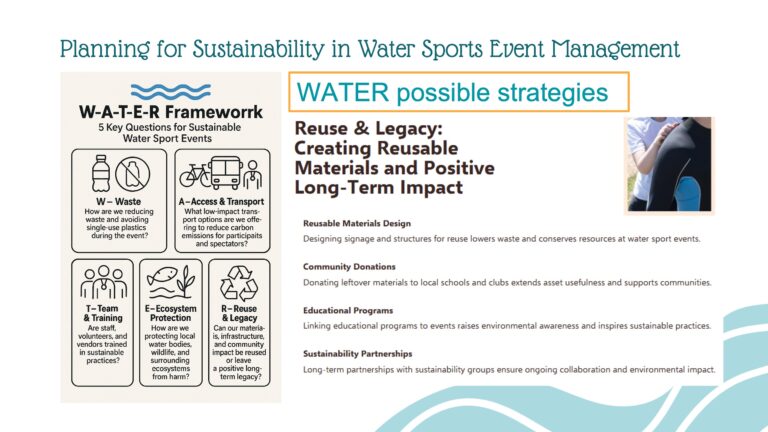
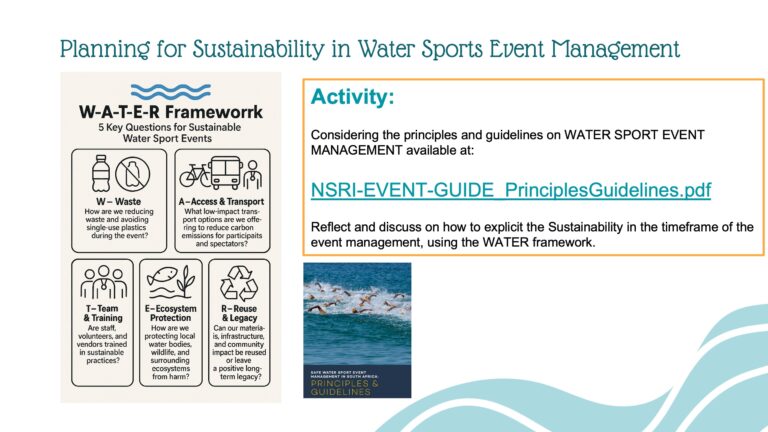
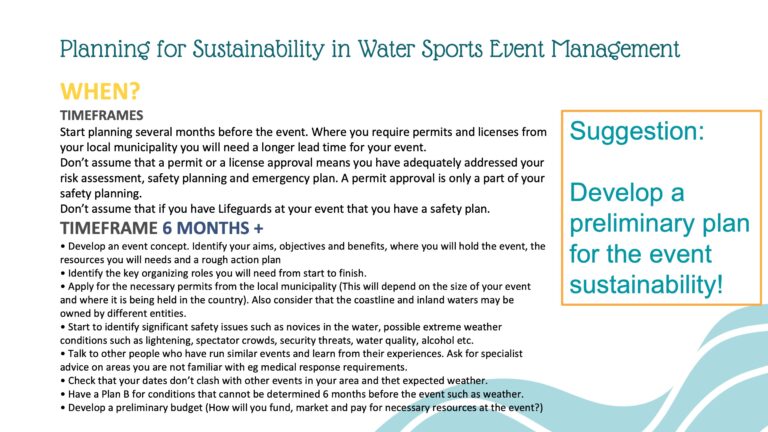
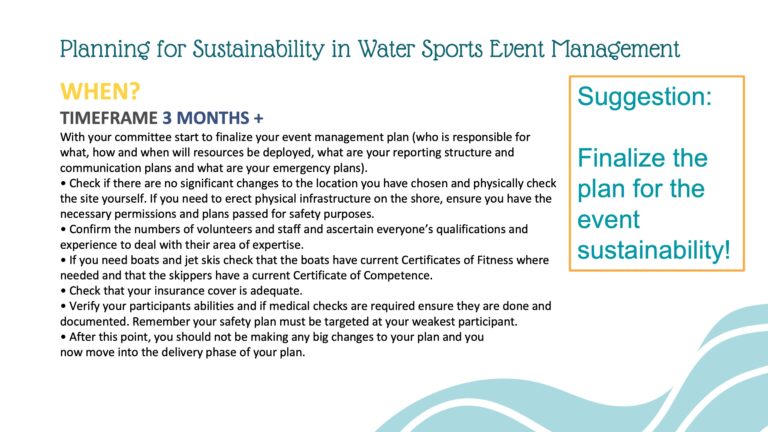
This chapter focuses on the practical aspects of organizing sustainable water sports events. It covers event planning, site selection, risk assessment, and the integration of sustainability into logistics and operations. Topics include minimizing environmental impact, ensuring participant safety, engaging with local communities, and complying with relevant regulations
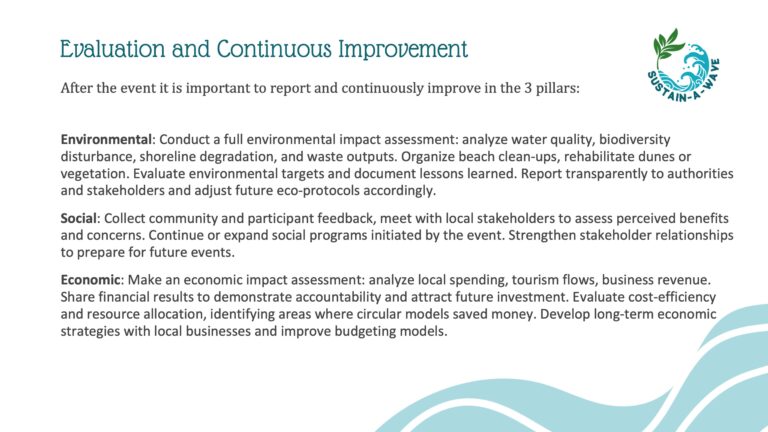
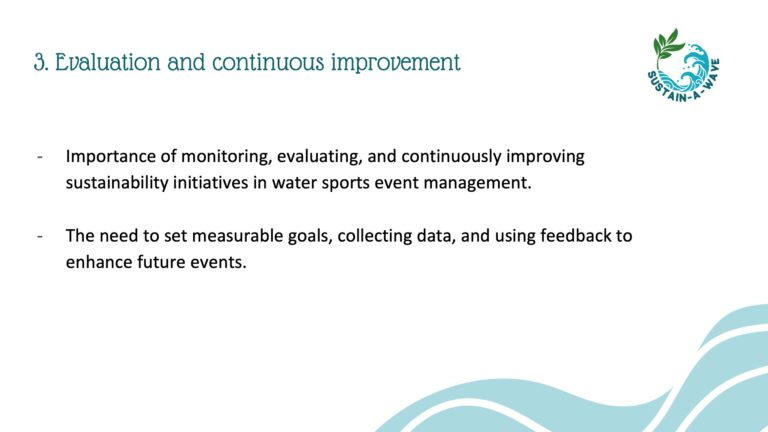
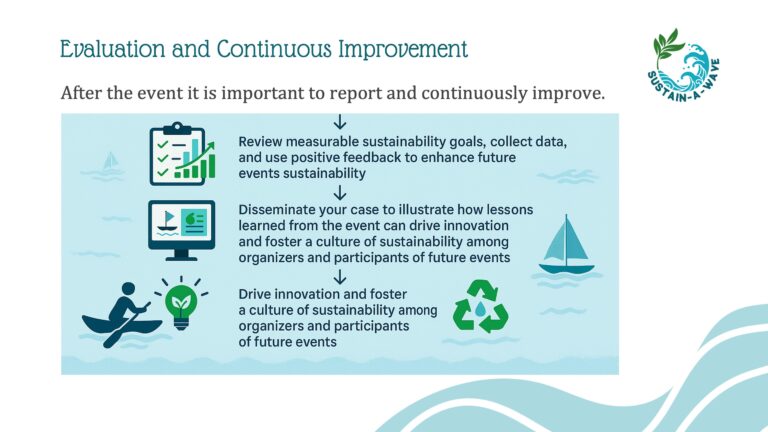
This chapter addresses the importance of monitoring, evaluating, and continuously improving sustainability initiatives in water sports event management. It mentions the need to set measurable goals, collecting data, and using feedback to enhance future events.
Adult Education Sectors

Sustainable water sports event management offers valuable learning opportunities for adult educators and their learners. It encourages the development of critical thinking, problem-solving, and leadership skills in the context of real-world challenges. By integrating sustainability into training programs, adult educators can empower learners to become advocates for responsible event management and environmental stewardship.

Potential Applications with practical examples

  • Incorporating sustainability modules into professional development courses for event managers.
  • Organising workshops on eco-friendly practices for volunteers and staff.
  • Facilitating community engagement projects that promote environmental awareness during events

Water Sports Sector

For professionals in the water sports sector, sustainable event management is essential for maintaining the integrity of aquatic environments and ensuring the long-term success of the industry. Adopting sustainable practices can enhance the reputation of events, attract environmentally conscious sponsors and participants, and reduce operational risks.

Potential Applications with practical examples

  • Implementing green procurement policies for event materials and equipment.
  • Partnering with local organizations to promote conservation initiatives.
  • Using digital tools to monitor and report on sustainability performance during events.
Site Assessment for Sustainability

For whom: Trainers and Learners

Instructions:
Visit (physically or virtually) two potential sites for a water sports event. Make a checklist to that covers environmental sensitivity, accessibility, waste management facilities, social interaction and potential risks. Assess the sites with the checklist and compare the findings and propose recommendations for the site to choose but alto on how to improving the site’s sustainability for the event and for future events.
For whom: Trainers and Leaners

Instructions:

Based on the activity 1 feed two AI platforms of your choice with the event scenario and the diagnose and ask for critique and improvement. Reflect on the responses and prepare a communication for the stakeholders of the event with specific sustainability challenges (e.g., waste generation, water pollution, energy use, or community impact). Make a role play with stakeholders considering event logistics, participant behavior, and local partnerships and make a final report of the activity.

Quiz